University Policy on Hazardous Waste Disposal
- Waste Disposal Policy at the University of Oum El Bouaghi – Hazardous Materials
- Introduction:
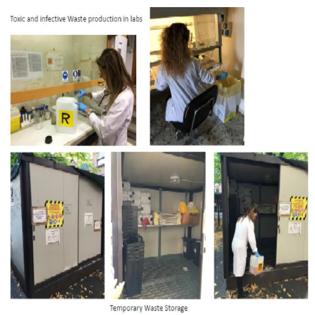
Larbi Ben M’hidi University of Oum El Bouaghi operates a sophisticated scientific network comprising 20 active research and pedagogical laboratory facilities spanning multiple disciplines, including advanced chemistry, microbiology, physics, and materials engineering. The high-level academic activities and practical teaching sessions conducted within these facilities inherently yield hazardous chemical and toxic liquid effluents. During the current annual period, the total volume of toxic chemical materials was tightly restricted to 0.85 tons (850 kg), encompassing spent organic solvents, heavy metal chemical solutions, acidic and basic residues, expired laboratory reagents, and chemically contaminated glassware or single-use laboratory equipment.
Due to the acute threat that hazardous substances pose to human health and ecological integrity, the university enforces a non-negotiable policy of absolute segregation and zero-landfill integration for laboratory byproducts. Consequently, exactly 100.00% (0.85 tons) of the generated toxic waste was successfully collected, safely managed, and fully neutralized through specialized professional treatment pathways, justifying the selection of the Extensive treatment classification.
The underlying operational protocols are multi-layered and highly standardized. At the immediate conclusion of every laboratory procedure, hazardous liquid chemical waste is isolated at the source, preventing any mixing with general university drainage networks. It is carefully decanted into color-coded, labeled, high-density polyethylene (HDPE) carboys designed to resist chemical corrosion. These containers are tracked by technical laboratory managers and safely transferred to a secure, centralized, and strictly ventilated hazardous waste depot on campus. Periodically, the university executes its formal agreement with a certified national agency specialized in hazardous waste disposal. This licensed entity safe-hauls the chemical inventory using specialized transport to a heavy industrial facility, where the materials are subjected to high-temperature eco-friendly incineration or rigorous chemical neutralization in strict compliance with national environmental safety mandates.
Achieving a 100.00% safe treatment rate for laboratory toxins is a cornerstone of the university’s environmental safety record. This absolute containment model completely eliminates the risk of hazardous chemicals leaching into the local water table or local municipal aquifers, safeguarding regional water security and protecting neighboring aquatic wildlife. Furthermore, by maintaining strict oversight over this 0.85-ton stream, the university demonstrates that advanced scientific innovation and academic research can co-exist responsibly with the highest parameters of environmental accountability, chemical stewardship, and public safety.
- General Principles:
Compliance with National Laws and Regulations: The University of Oum El Bouaghi is committed to complying with national laws and regulations concerning waste disposal and hazardous materials.
Handling Hazardous Materials: The university must take necessary measures to carefully handle hazardous materials and their proper covering.
- Practices:
Waste Classification: The university must correctly categorize waste according to different types, such as general and hazardous.
Storage and Covering: The university stores hazardous materials safely and covers them according to national laws and regulations.
Waste Management: The university implements waste management programs, ensuring safe and proper disposal.
- Responsibility:
Awareness and Training: The university provides guidance and training to its members to understand and comply with waste disposal policies and national laws.
Compliance with Reporting: The university commits to providing regular reports to the National Waste Agency regarding its waste disposal practices.
- Execution:
This policy is an integral part of the practices of the University of Oum El Bouaghi, and all members must enjoy it and adhere to it.
Execution should be based on nationally imposed laws and procedures by the National Waste Agency with precision.
- Sources:
National Waste Agency: https://and.dz/4708-2/
Guide for Managing Waste from Medical Activities: https://and.dz/site/wp-content/uploads/Guide_DAS_Arabe.pdf
Agreement with the Directorate of Environment – Oum El Bouaghi: http://www.univ-oeb.dz/vrlex/wp-content/uploads/2018/11/Conventions-Partenariat-socio-economique/Convention-direction-de-lenvironnement.pdf
- Waste Disposal Practices at the University of Oum El Bouaghi – Hazardous Materials
Disposal of waste at the University of Oum El Bouaghi, especially the proper covering of hazardous materials, is based on nationally recognized laws and regulations, which can be found on the National Waste Agency’s website. These include:
Technical Characteristics of Hazardous Waste Cards:
